Online marketing for small businesses helps you find customers through search engines, maps, advertising, social media and recommendations. To turn these channels into sales, you need to connect them to a clear offer, a useful website page and a prompt response to enquiries. Even a small company should decide which services to promote, who to reach and how much it can spend to acquire a customer.
The owner of a repair workshop, salon, cleaning company or small shop rarely has the resources to manage every platform at once. A practical strategy therefore starts with priorities. This guide explains how to choose channels for your goals, prepare your website, assess your budget and build a marketing plan for the first 90 days.
Where to start: choose one priority service and a specific audience, prepare a page with clear terms and examples of your work, set up enquiry tracking and launch one main acquisition channel. Expand your marketing once you understand which enquiries turn into paid orders.
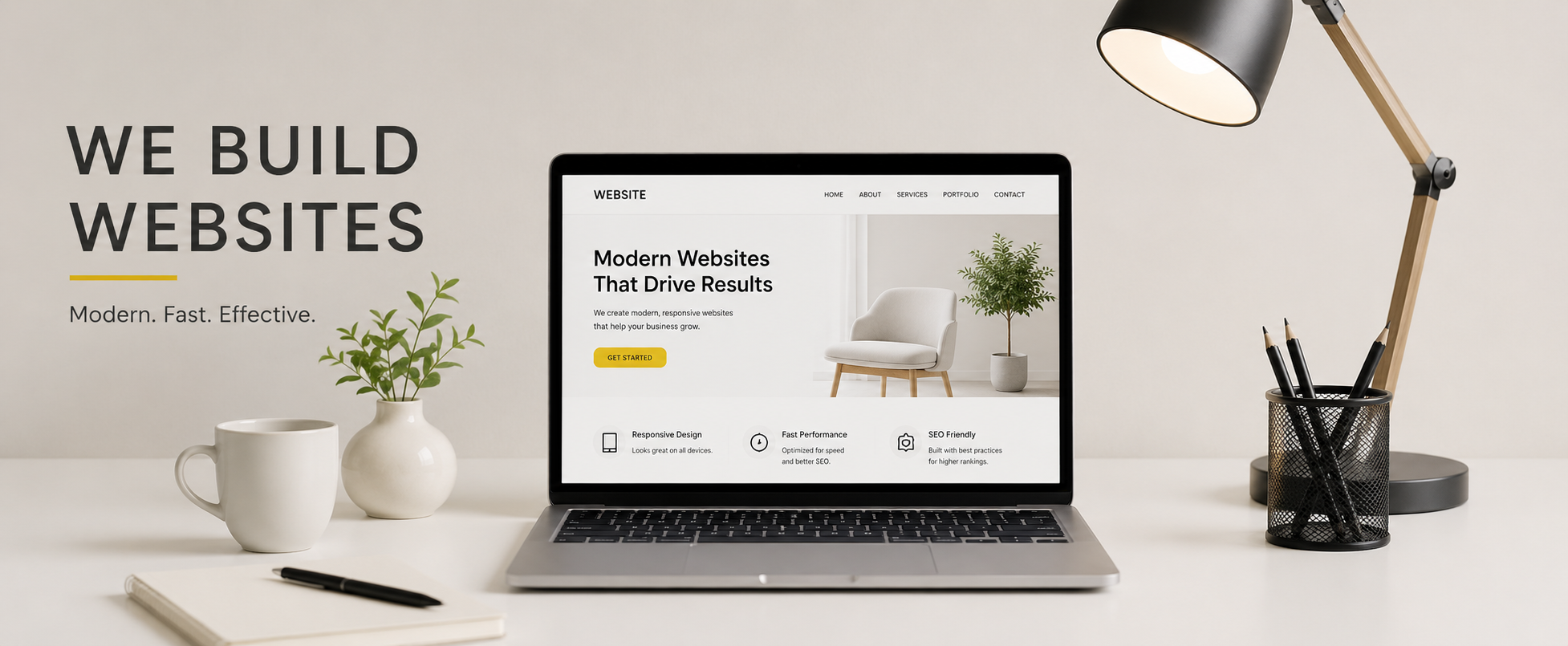
Where to start with small business online marketing
Start with the outcome your company needs. “Become better known” is difficult to translate into specific actions. “Fill a technician’s available weekday appointments” or “receive enquiries for post-renovation cleaning in our city” already helps you choose a service, audience and advertising approach. Consider your capacity, too: attracting urgent jobs makes little sense if your next available appointment is two weeks away.
Before launching, answer five questions:
- What are we promoting? A service or product that earns the business money and that you are ready to deliver.
- Who are we selling to? For example, homeowners who have just renovated, managers of small offices or buyers of a particular product category.
- Where do we operate? Specify your actual service areas, travel coverage or delivery terms.
- Why would someone choose us? Show clear pricing, suitable availability, a relevant specialism, what the service includes or proven experience.
- How will the customer place an order? Through a booking, phone call, form, shopping basket or WhatsApp message.
An offer such as “We will assemble your wardrobe, secure it to the wall and remove the packaging; we will confirm the price using the model details and photos” tells a customer more than “quality services at affordable prices”. The more precisely you describe the outcome, the easier it is to prepare a page and an advert that match the customer’s expectations.
Which online marketing channels should you choose?
The choice depends on how people buy your service. Someone dealing with an urgent breakdown may search for a provider on Google. Someone choosing furniture or a gift may start by looking at photos and comparing ideas. An existing customer may simply need an easy way to order again. These situations call for different actions.
| Channel | When it helps | What to prepare |
|---|---|---|
| Website SEO | Customers search for your services, compare options and ask questions online. | Service pages, useful content and a technically accessible website. |
| Google Business Profile | Your business receives customers in person or visits them. | An accurate profile, contact details, opening hours, photos and genuine reviews. |
| Google Search ads | You want to test existing demand for a specific offer. | A landing page, a test budget and tracking for relevant actions. |
| Facebook and Instagram | Your service or product can be demonstrated through photos, videos and examples of use. | Several adverts, a clear offer and a straightforward way to enquire. |
| Content and recommendations | Customers want to understand your approach and trust the provider before buying. | Examples of your work, answers to questions and a clear process for collecting feedback. |
Start with a channel that fits your customers’ behaviour and your resources. For example, a workshop with a limited service area could begin with its local presence and search advertising for one service. A studio with a strong visual portfolio could test image or video adverts. Treat these as hypotheses: decisions about further spending should depend on the quality of the enquiries.
Your website: where to send potential customers
A website helps people understand your offer without a lengthy exchange of messages. You do not need a large website to get started. A landing page may suit a single service; several services are often easier to explain on separate pages with their own terms, examples and answers to questions. When planning a website for your business, think through this structure before creating the visual designs.
On a service page, customers should be able to find:
- what the work includes and which problems you solve;
- your service area and the languages you can communicate in;
- a price, a price range or a clear explanation of how you calculate a quote;
- real photos, examples of completed jobs and reviews;
- booking and payment terms, including how additional work is agreed;
- a visible way to contact you.
Check the page on a phone: is the text readable, do the photos load, does the form work and does any floating widget cover important buttons? Try a simple test: ask someone unfamiliar with your business to find the price and send an enquiry. The places where they hesitate or ask questions will show you what needs improving.
If you sell products, plan your product pages, delivery options, payment methods and checkout separately. These are best considered during e-commerce website development. An advert for a specific product should normally lead to that product’s page, where the buyer can check availability and purchase terms.
SEO: attracting customers through organic search
SEO helps search engines find and understand your pages, while helping users find a relevant answer. The work starts with customer searches: which services people look for, how they describe the problem and whether they mention a location or price. Searches are then grouped by intent and assigned to appropriate pages. “Book post-renovation cleaning” and “how to remove construction dust yourself” express different needs.
For a small business, a useful sequence is to prepare the main service pages first, followed by content that helps customers choose. For example, a TV mounting service page could be supported by an article about choosing a wall bracket. A relevant link from that article takes the reader to the service once they understand what they need.
SEO services cover website structure, content and the technical accessibility of pages. This includes checking headings, internal links, indexing and problems that make the site difficult to use. Google Search Console lets you see which searches generate impressions and clicks for your pages.
There is no need to stretch every article to an assumed “ideal” length. It is more useful to explain the service, clarify its limitations and answer questions people ask before ordering. Google explicitly states that it has no preferred word count. Add detail where it helps someone make a decision.
Further reading: Google’s guidance on helpful content.
Local marketing: reaching customers in your area
For a salon, garage or mobile service provider, location determines which enquiries can turn into jobs. State your actual service areas, travel terms and any distance-related charges on your website. If you have an office or workshop, add clear directions and details that help customers find the entrance.
If your business meets the service’s eligibility requirements, set up a Google Business Profile. Choose an accurate category and check your phone number, opening hours, website link and service descriptions. Publish photos that show the business and its work. After completing a job, you can invite the customer to leave an honest review and respond to their feedback.
Google’s local results take relevance, distance and prominence into account. Mentioning a city in your text is therefore only one small part of the work. Avoid creating large numbers of identical pages with only the place name changed. A separate location page is useful when it includes its own terms, examples or meaningful details about serving that area.
Source on local ranking factors: Google Business Profile Help.
Google Ads: reaching people who are already searching
Search advertising lets you show an offer to people who are already looking for a product or service. For a small business, this provides a way to test a specific service, such as dishwasher installation or office cleaning. However, launching adverts does not by itself mean that the resulting enquiries will be profitable.
Before launching Google Ads campaigns, agree on the target area, landing page and action you will count as a result. Prepare several adverts with specific terms. Check that you can answer calls or handle messages during the hours when the adverts run.
After launch, review the available search terms and the quality of the enquiries. If your business sells installation services, searches for instructions on doing the work yourself may be a poor fit. These findings help you refine the campaign. If the enquiries match your service but do not lead to sales, review your pricing, availability and response process.
Avoid moving the budget to a different service after one isolated order or a few unsuccessful clicks. First make sure your tracking works and that you have enough enquiries for a meaningful comparison. The length of a test depends on demand, budget and how long customers take to decide.
How Search campaigns work: Google Ads Help.
Facebook and Instagram: building interest before a purchase
On social media, someone may see your offer before they start actively looking for the service. Your advert therefore needs to explain quickly what you offer and why it matters to them. A furniture workshop could show a finished piece in a room, a cleaning company could demonstrate its process and results, and a shop could show a product being used in everyday life.
When setting up Facebook and Instagram advertising, connect the visual, message and next step. If an advert invites people to find out the cost, the page they reach should explain how pricing works or offer an easy way to submit the details needed for a quote.
Prepare several distinct approaches: show the result, address a common concern and explain the process. Compare relevant enquiries as well as reactions and views. A polished video may attract broad attention, while a simpler photo with clear terms may reach someone ready to order.
Choose platforms with the country and your audience’s habits in mind. For a European business, the language of the advert and landing page should match the customer’s language. If you work across several markets, separate your offers and evaluate their results individually: the same material can be received differently in different countries.
Content, reviews and repeat business
Useful content answers questions that arise before a purchase. Collect them from customer conversations: what the price includes, how long the work takes, how to prepare, what affects the cost and which options suit a particular situation. These questions can become articles, short videos and additions to service pages.
For example, an article called “What to check before booking post-renovation cleaning” could explain the scope of work, surface protection and how a property is assessed. A link to the service fits naturally at the end. It continues the article’s subject and helps the reader take the next step.
When presenting completed work, explain the original task, the constraints, what you did and the result. If you publish figures, state the period and how they were calculated. A real small job with clear details is more useful than an impressive success story with no supporting evidence.
Remember the customers who have already bought from you. Keeping their order history, making repeat bookings easy and offering useful advice after a job can help maintain the relationship. If your service involves regular maintenance, you can agree with the customer in advance on an appropriate reminder.
How much does small business online marketing cost?
The budget includes website preparation, content, marketing setup and management, advertising spend and any necessary tools. Separate one-off work from monthly costs at the beginning. This makes it clearer what the launch will cost and how much the business can afford to spend regularly.
There is no single budget that suits every company. The country, competition, average order value, profit per order and number of customers you can serve all affect the calculation. With a limited budget, narrow the test to one service and one area while retaining enough money to assess demand.
An illustrative calculation, not a forecast. Suppose you spend €600 on adverts and €200 on campaign management in one month. You receive 20 suitable enquiries and gain five new customers. For this example, assume these costs relate only to that campaign.
Cost per suitable enquiry, including management: €800 ÷ 20 = €40. Customer acquisition cost: €800 ÷ 5 = €160. If you count advertising spend alone, the figures are lower: €30 and €120 respectively. When comparing reports, make sure they include the same categories of costs.
Suppose each order leaves €250 after direct delivery costs, before customer acquisition costs and overheads. Five orders would leave €1,250; deducting the €800 campaign cost would leave €450 to cover overheads and contribute to profit. High revenue alone does not demonstrate profitability.
If customers return, track repeat purchases separately and use actual data. Do not treat anticipated repeat sales as income already earned. For a new business, it is more prudent to check the economics of the first order and then refine the model as customer history builds up.
How to track enquiries and understand what works
A clear spreadsheet or simple CRM is enough to begin measuring results. For each enquiry, record the date, source, service requested, whether it fits your offer and the outcome: an order, a refusal or a decision still pending. For paid orders, add the amount and direct costs. This connects your marketing activity to business results.
Separate four levels of results:
- Website visit. Someone opened a page.
- Website action. They clicked a phone or WhatsApp button, or submitted a form.
- Suitable enquiry. They contacted you about a service you actually provide.
- Paid order. The conversation resulted in a sale.
Tracking clicks on a WhatsApp widget is useful, but a person may click and never send a message. Website events therefore need to be compared with actual conversations. Several messages from the same customer should not be counted as several new enquiries.
Use Google Search Console to monitor search queries and clicks, and website analytics to track visitor actions. Tagged links can help distinguish campaigns, but some sources will remain uncertain: a person may return later or message you from another device. A brief “How did you find us?” question can supplement the data.
If enquiries are low, review the customer journey stage by stage. Impressions without clicks call for a look at the searches and your offer. Visits without enquiries call for a check of the page and contact options. Suitable enquiries without orders call for a review of your terms, response speed and reasons for lost sales.
A small business marketing plan for the first 90 days
This plan helps organise the work. Adjust the timing to reflect website readiness, seasonality and the length of your sales process; 90 days is not a promise of profitability or particular search rankings.
Days 1–14: prepare your offer and tracking
Choose a priority service, audience and area. Review the questions customers ask and what competitors offer. Prepare your page, photos, terms and contact options. Test forms, set up the main tracking events and start recording enquiries.
Days 15–30: launch a focused test
Launch one main acquisition channel. If your business qualifies for a Google Business Profile, complete it and check the details. Collect early enquiries and reasons for lost sales. Fix obvious obstacles, such as a broken form, unclear pricing or questions the page does not answer.
Days 31–60: improve what you are already testing
Assess enquiry quality, costs and sales. Refine your adverts and pages, and add answers to recurring questions. Publish a useful article related to your main service and a new example of completed work. Change major elements one at a time so you can understand what caused a difference.
Days 61–90: decide what to develop next
If the service attracts suitable enquiries at a sustainable cost, expand gradually. Your next step might be a related service, an additional area or a second channel. If you have too little data, continue measuring. If demand exists but the orders are unprofitable, review the offer and costs before increasing the budget.
Common mistakes that prevent enquiries from becoming sales
- Promoting every service at once. A small budget is spread across many services, making each one harder to assess.
- Making promises without clear terms. Customers see general claims but cannot understand the price, scope of work or next step.
- Sending people to an unsuitable page. The advert mentions one service, but visitors have to search for it again on the website.
- Responding slowly. An interested customer has time to make arrangements with another provider.
- Judging performance only by clicks and likes. Activity looks encouraging, but its connection to orders remains unknown.
- Changing everything at once. A new budget, different adverts and a redesigned page make it difficult to tell what affected the result.
Frequently asked questions
Can a small business market itself without a website?
Yes. You can test an offer using a profile on a suitable platform, social media and direct messaging. A website becomes useful when you need to explain several services in detail, develop organic search visibility and bring customers from different channels to one clear destination.
Should I start with SEO or paid advertising?
Advertising can provide a controlled test of an offer if you have a budget and a suitable landing page. SEO requires consistent work on the website and the searches you want to serve. The choice depends on your timescale, competition and the state of the project. Basic website improvements can often run alongside a limited advertising test.
Are there free ways to promote a business?
You can work with recommendations, helpful posts, relevant communities and a business listing if you meet the platform’s requirements. Not paying for placement does not remove the time needed to create content, respond to enquiries and serve customers.
When will I see the first results?
With advertising, impression and click data becomes available once adverts start running, but assessing enquiries and profitability requires enough observations. SEO changes may become visible gradually. Timing depends on competition, the state of the website, demand and the work completed.
Can I manage everything myself?
A business owner can collect customer questions, prepare photos, clarify website information and keep an order record. Specialist help is useful where time or skills are limited, including development, analytics, technical SEO and campaign setup.
Which language should I use to market a business in Europe?
Use the language of the audience you are ready to serve. A Russian-language page can reach Russian-speaking customers, but it does not replace a local-language or English version when demand comes from those audiences. Start with your priority audience and make sure communication remains clear after the enquiry.
Plan your online marketing with Yellow Click
Yellow Click helps businesses in Europe and CIS countries with website development, SEO and online advertising. You can start with a specific task: preparing a service page, investigating a lack of enquiries or testing an advertising channel.
Tell us what your company does, where you operate and what you want to achieve. If you already have a website, include the link. You can contact us through the WhatsApp widget on this page or choose a convenient option on our contact page.
Discuss my project_320x180_030.jpg "How Much Does Google Ads Cost in Europe and What Budget Does a Small Business Need? изображение")